
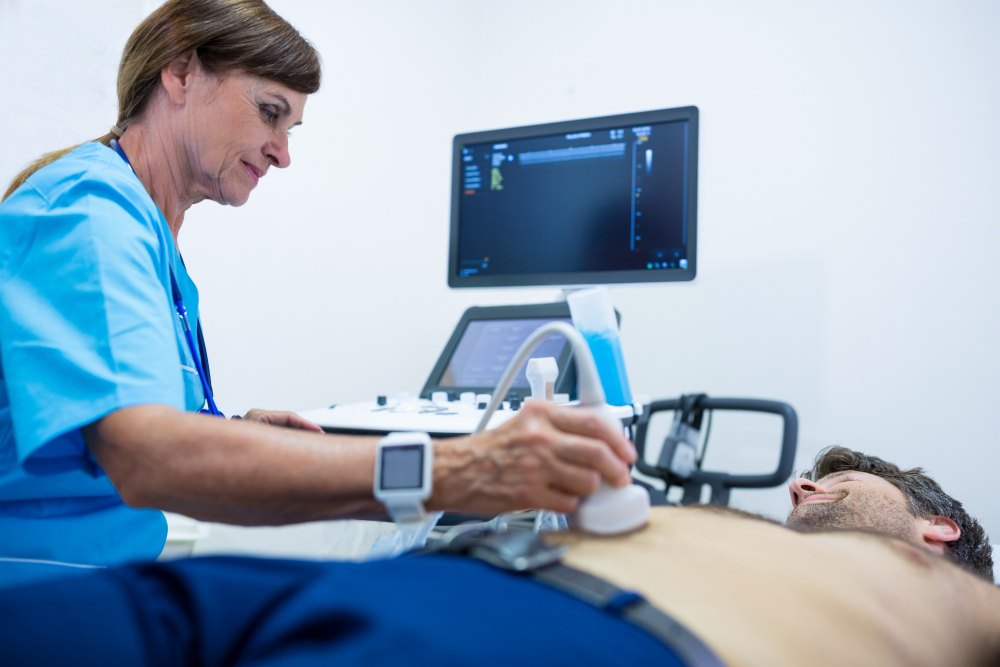
What is a USG-Guided Biopsy?
A USG-guided biopsy is a medical test that uses ultrasound to help doctors collect tissue samples. USG stands for ultrasound guidance. This method helps doctors find the exact spot to take a sample. Because of this, it is often called an ultrasound-guided biopsy. Many people prefer this test because it is a minimally invasive biopsy. It helps doctors make a precise diagnosis with USG and causes less discomfort than older methods.
How Does USG-Guided Biopsy Work?
First, a doctor uses an ultrasound machine to see inside your body. The ultrasound shows real-time images on a screen. Next, the doctor gently guides a thin needle to the right spot using these images. Because the doctor can see the needle’s path, the sample is taken from the exact area needed. This process is quick and safe. In most cases, it takes less than an hour.
Benefits: Precise Diagnosis and Minimal Discomfort
USG-guided biopsy has many benefits. For example, it helps doctors find the right spot for the sample. This means you get a more accurate result. Also, the procedure is gentle and causes less pain. Here are some key benefits:
Because of these benefits, many doctors recommend this biopsy procedure for comfort and accuracy.
When is a USG-Guided Biopsy Recommended?
Doctors may suggest a USG-guided biopsy in several situations. For instance, it is often used when a lump or abnormal area is found during an ultrasound. Additionally, it helps check for infections, cancer, or other diseases. Common reasons include:
Because it is safe and accurate, this method is widely used in hospitals and clinics.
What to Expect During the Procedure
Before the biopsy, your doctor will explain the steps. Usually, you do not need to stay overnight. Here is what you can expect:
Most people feel only mild pressure or a quick pinch. After the test, you can usually go home the same day.
Safety, Risks, and Recovery
USG-guided biopsy is considered very safe. However, like any procedure, there are some risks. For example, you may have mild pain, bruising, or swelling at the site. Rarely, there may be bleeding or infection. To reduce risks, doctors follow strict safety steps. Recovery is usually quick. Most people return to normal activities within a day. If you notice fever, severe pain, or heavy bleeding, contact your doctor right away.
Frequently Asked Questions
Conclusion
In summary, a USG-guided biopsy is a safe and effective way to get a precise diagnosis with minimal discomfort. Because it is minimally invasive, recovery is quick and easy. If you have questions or concerns, consult a radiologist at Elite Diagnostics for personalized advice about USG-guided biopsy.